December 09, 2025
We at Elmex have spent years close to shop floors, panels, and teams who build vital systems. As a brand with deep roots since 1963, Elmex has seen how small parts can shape the whole system. In our daily work, we aim to give safe, neat, and dependable wire joints that save time and lower risk. When we help users pick the right earth link, we see the same issue each time: they want a joint that locks well, lasts long, and does not slow down the work. This is where the Push-in connection style brings strong value, and why many of us now trust this method while choosing products from a leading Ground Terminal Blocks Manufacturer and Supplier in India.
When we guide users on safe wiring, we know each step matters. Loose links lead to heat, faults, and costly stops. Tight, clean, and well-planned links bring peace of mind. This is also why earth terminal blocks have grown in use across many plants. The need for better safety, neat layout, and short install time keeps rising, and we see that trend each day when we speak with teams who wire large boards.
As a brand that began with DIN rail terminal blocks, Elmex has spent decades learning how wires behave once locked inside a panel. We have seen quick fixes fail. We have seen rushed work bring harm. We have also seen how the right link lifts the whole build quality. This is why push-in parts make so much sense today.
Fast Work, Firm Grip, Clear Wins:
When we talk about speed, we do not mean careless work. We mean fewer steps with a secure hold. A push-in link uses a spring clamp that grips the wire as soon as we push it in. No tool. No screw. No extra step. This gives a neat and strong joint in seconds. When users deal with hundreds of wires, this makes a huge change in work hours saved.
We often hear teams say that this simple act of pressing the wire into place cuts stress. No tired hands after long shifts. No loose screws. No fear that a joint may slip due to long use. With a direct link, we gain trust in the system. A panel that stays still and safe over the years grows from such small wins.
When we plan panels, we also aim for clean lines. Push-in links line up well, give sharp bends, and let us place many wires in a tight space. The build looks neat, which helps with checks and future care.
Better Safety With Strong Earth Links:
Ground links hold the top role in safety. Every part of the panel depends on a clean path to Earth. When that path is strong, we cut the risk of shock, short bursts, and heat. This is why our team at Elmex pays close attention to each earth link design. We test grips, heat points, and long-term strength.
In real use, we see that errors often come from loose screws. Push-in styles reduce that risk with a constant spring force. The clamp adjusts with wire changes like heat and slight pulls. This helps keep the joint firm at all times.
Many users also tell us that the instant “click feel” builds trust. It gives a clear sign that the wire is locked. This is helpful when the plant is loud, dark, or rushed. We do not need to guess. The link tells us.
Ease of Use When Panels Expand:
Industrial plants grow, loads change, and new tools come in; hence, panels often need new links. Push-in parts help with this too. We can add or remove wires with a small press on the release point. This keeps the full panel neat without pulling apart other lines.
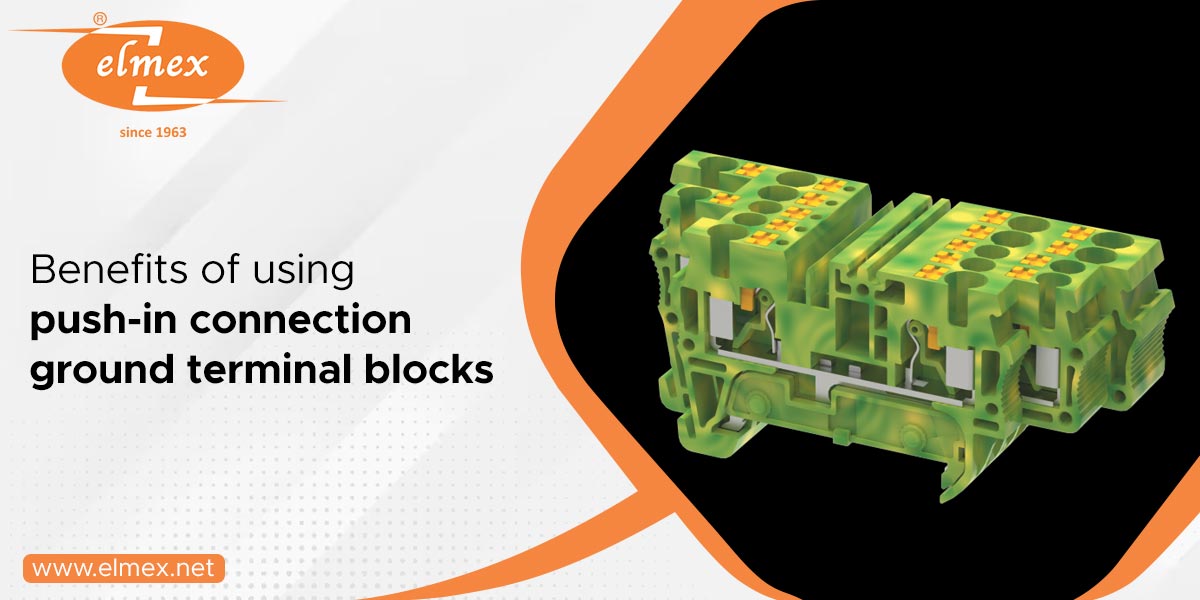
When we built our series, we wanted to help both small loads and high loads. So the range we offer covers many needs. Our PGQ1.5 helps with light tasks that need neat rows and clear routing. The PGQ2.5 is a strong fit for mid-load links where we need safe ground paths. For compact boards, users often pick the PGQ2.5-1X2, which allows more points without taking extra rail space. For dense builds, the PGQ2.5-2X2 supports more links while keeping the layout clean.
For higher loads, we guide users towards the PGQ4. This part gives a strong grip and a firm earth path even under tough use. Some teams pick the PGQ4-1X2 to route twin lines neatly in small panels. In larger plants or boards with many earth lines, the PGQ4-2X2 offers more scope with the same neat look. And for heavy tasks where wire size grows, our PGQ6 helps keep each link safe and easy to place.
Our aim at Elmex is to help users match the right link with the right task. When the match is right, the panel runs smoothly, lasts long, and stays safe.
Long-Term Strength With Low Care Needs:
Once we lock a wire, we want it to stay locked. Push-in parts hold steady due to the built-in spring. It keeps a fixed force on the wire even when heat, load, or slight pulls try to loosen it. This is vital for Earth paths that must never fail.
We also see reduced care costs. A screw link may need checks as the metal shifts. A push-in link avoids this due to the spring clamp’s steady force. Over the years, this has cut the time spent on checks.
When we work with teams in plants, they often tell us how these small choices in link style help them worry less. They trust the system. They spend more time on key tasks, not on fixing loose wires.
Clear Labels, Quick Checks, Simple Layout:
A neat panel is not just for looks. It helps teams act fast during checks, faults, or upgrades. Push-in parts often come with clear labels and slots. We at Elmex always push for simple marking because we know how hard it is to trace faults in a messy board.
When wires sit straight and tight, checks take less time. Breaks stand out. Heat points show up early. A clean panel gives fewer shocks and fewer delays.
Why Push-In Is Now a Trusted Choice?
We have watched this move grow across many plants in India and abroad. People want speed, safety, a neat layout, and long life. Push-in joins all these in one method. We feel proud that our work at Elmex helps many teams get these gains without stress.
The rise of clean energy, smart plants, and small panels demands new ways of wiring. Push-in links fit these needs with ease. They save hours. They build trust. They cut risk.
Final Thoughts:
We believe ground links are the heart of safe work. When we help users build safe earth paths with push-in parts, we see their relief. We see fewer faults, safer hands, and neat boards that last longer. This is why we stand by this method and keep refining our full range.
As we look ahead, we will keep working on new shapes, new grips, and new ideas to help teams wire with ease. All we want is a build that stays safe and strong, every single day.


